What Is a High-Performance Home — And Why Does It Actually Matter for Your Health?
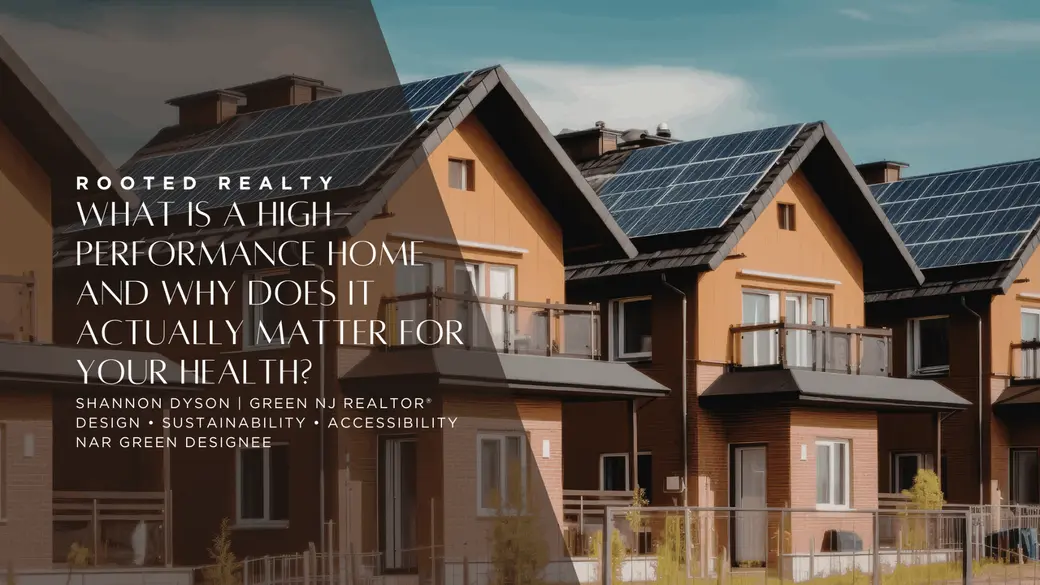
What Is a High-Performance Home — And Why Does It Actually Matter for Your Health?
There's a moment a lot of people describe — usually within the first few days of moving into a new place — where they just feel off. A low-grade headache that won't quit. Sleeping more but still waking up tired. A scratchy throat that showed up out of nowhere. And because life is busy, they chalk it up to the stress of the move.
I've heard this more times than I can count. And more often than not, it's not the stress. It's the house.
The term 'high-performance home' gets used a lot right now — sometimes as a marketing phrase, sometimes as a genuine building standard. So let's slow down and talk about what it actually means, and why it matters far beyond your energy bill.
So What Makes a Home 'High-Performance'?
A high-performance home is designed and built — or thoughtfully retrofitted — to operate more efficiently than a standard home. That means it uses less energy, maintains better air quality, and creates a more stable, comfortable indoor environment year-round.
The building blocks typically include a well-sealed envelope (walls, roof, windows, and doors that minimize air leakage), superior insulation, mechanical ventilation that brings in filtered fresh air, and high-efficiency heating and cooling systems. But here's what often gets left out of that definition: high-performance homes are also significantly healthier homes.
The Indoor Air Quality Problem Most People Don't Know They Have
The U.S. Environmental Protection Agency has found that indoor air can be two to five times more polluted than outdoor air — and in some buildings, that number climbs even higher. We spend roughly 90% of our time indoors, which means the air quality inside your home has an enormous impact on how you feel day to day.
Standard construction doesn't prioritize this. Older homes especially, tend to have poor ventilation, hidden moisture issues, and building materials that off-gas volatile organic compounds (VOCs) — chemicals that can cause headaches, respiratory irritation, and long-term health effects with prolonged exposure.
A high-performance home addresses this intentionally. Mechanical ventilation systems like ERVs (Energy Recovery Ventilators) continuously bring in fresh, filtered outdoor air while exhausting stale indoor air — without the energy penalty of just cracking a window. The result is an indoor environment that's consistently cleaner and more breathable.
Source: U.S. EPA Indoor Air Quality — epa.gov/indoor-air-quality-iaq | EPA Interactive Demo Home Tour — epa.gov/indoor-air-quality-iaq/interactive-tour-indoor-air-quality-demo-house
The Energy Piece — And Why It's Connected to Comfort
People often separate the energy conversation from the comfort conversation. They're actually the same conversation. When a home is well-insulated and properly air-sealed, it holds a consistent temperature — no more cold corners in January or stuffy rooms in August. That consistency is a direct quality-of-life upgrade. And yes, it reduces energy bills too, sometimes dramatically. According to ENERGY STAR, certified high-performance homes use 20-30% less energy than standard homes built to code.
The HERS Index (Home Energy Rating System) is one of the most widely used tools to measure this. A standard new home scores around 100. A net-zero home scores 0. The lower the number, the better the performance — and the lower your ongoing costs.
Source: HERS Index — hersindex.com | Interactive HERS Tool — hersindex.com/hers-index/interactive-hersindex/ | ENERGY STAR — energystar.gov
This Isn't Just for New Construction
One of the questions I hear most often is: 'Is this only for people building new?' It's not. Existing homes can be improved significantly with targeted upgrades — air sealing, insulation, ventilation, window replacements, and efficient HVAC systems. A certified energy auditor (through BPI — the Building Performance Institute) can walk through your home, identify where it's losing energy, and prioritize upgrades based on your budget and goals.
You don't have to do everything at once. Most people don't. But knowing what your home actually needs — rather than guessing — is a really grounding place to start.
Source: Building Performance Institute — bpi.org | DOE Home Energy Score — energy.gov/home-energy-score
Some of the Easiest Wins — Numbers Worth Knowing
Here's something I find really grounding when people are figuring out where to start: some of the most impactful changes in a home are also the simplest and least expensive. Not the headline renovations — the small, unglamorous stuff that quietly compounds over time.
Switching to LED lighting, for example, reduces a light's energy consumption by about 90% compared to incandescent bulbs. LEDs last roughly 25 times longer. The average annual savings: around $225 per year just in lighting costs. That's a change that costs a few dollars per bulb and pays for itself almost immediately. (Source: Sustainable Princeton Business Guide, CAPERS Research 2025)
DIY air sealing — running caulk and weather stripping around doors and windows where air is leaking in or out — can reduce your energy bill by 10-20%. The average cost of materials is about $10. That's not a typo. For a typical NJ homeowner, the savings can be around $100 per month in a drafty home. The investment pays for itself in less than a month.
A smart thermostat runs $300-$400 and saves approximately $140 per year on energy bills — paying for itself within two to three years. In New Jersey, certified smart thermostats may also be eligible for up to $100 in rebates through state programs, which shortens that payback window further.
These aren't dramatic interventions. But they're the foundation of a more intentional home — and they make every other upgrade you eventually make more effective.
Source: Sustainable Princeton Sustainable Business Guide, CAPERS Research Project 2025 — Aritra Ray | NJ Clean Energy Program — njcleanenergy.com
The Bottom Line
A high-performance home isn't a luxury product or a niche concept. It's a home that's been designed or improved to support the people living in it — fewer toxins in the air, lower energy costs, more consistent comfort, and a smaller environmental footprint. When you understand what these features are and what they do, you start to see them differently in your home search, or in your current space.
And that shift in perspective? That's where good decisions get made.
If you're starting to think about what your home could feel like — not just look like — I'd love to be part of that conversation. High-performance homes are something I think about every day, and I'm genuinely happy to help you figure out what questions to ask first.
Shannon Dyson | Green NJ Realtor® | NAR Green Designee
Design · Sustainability · Accessibility
sdyson.real@gmail.com · 732.466.6444 · Instagram: @thedancingreagentnj
Categories
Recent Posts

"My job is to find and attract mastery-based agents to the office, protect the culture, and make sure everyone is happy! "